Straight-Wall Cartridge Options in West Virginia
It can be incredibly frustrating trying to figure out the maze of hunting regulations, especially when it comes to what kind of rifle you can actually take afield. You hear whispers about "straight-wall cartridges" and wonder if West Virginia has specific rules you need to follow, or if they're even a viable option for the rugged, diverse terrain we hunt. This guide is here to untangle that confusion, explaining what straight-wall cartridges are, why they’re popular, and how they fit into the West Virginia hunting landscape, ensuring you pick the right tool for your next adventure in the mountains.
Understanding Straight-Wall Cartridges in West Virginia Hunting
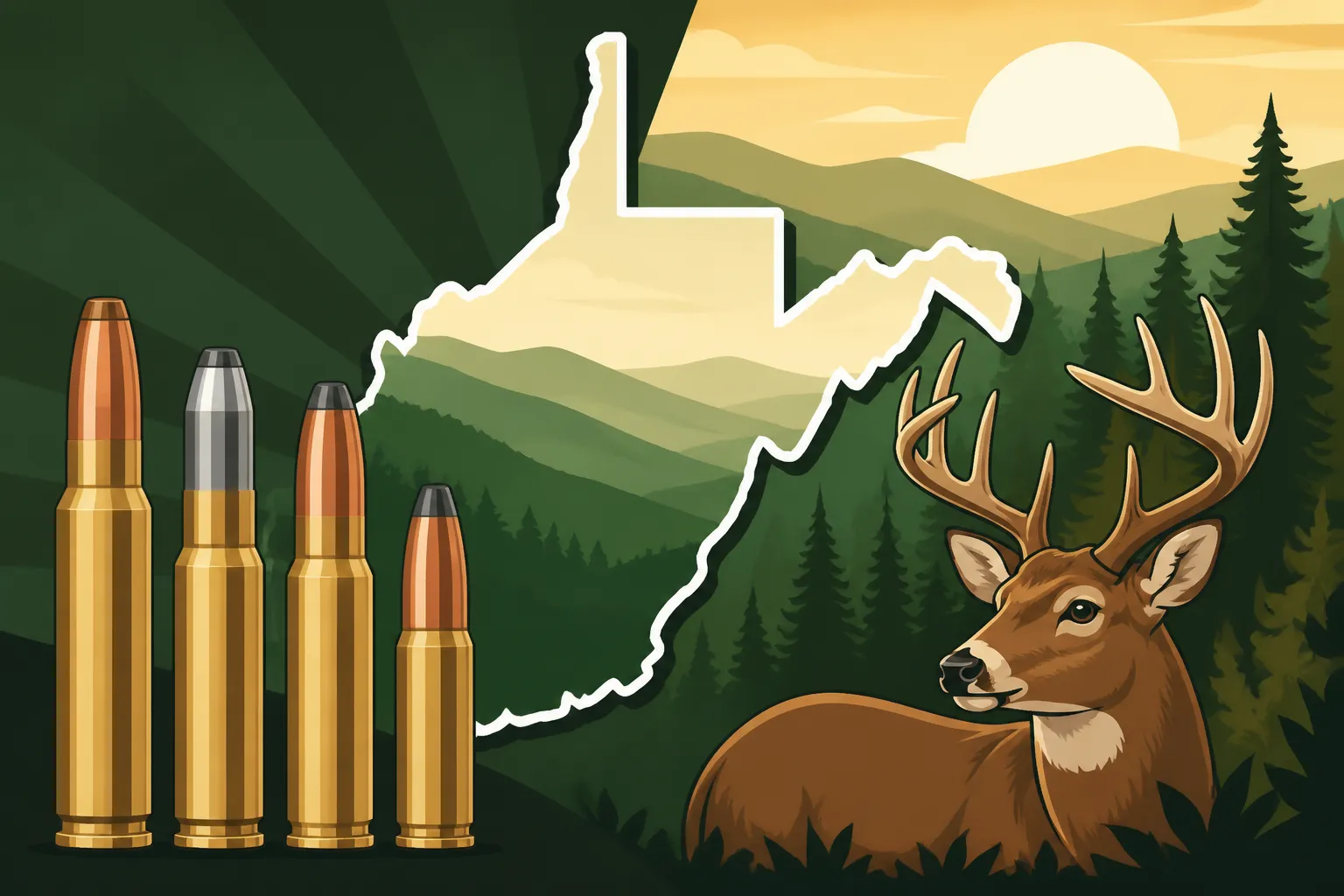
First off, let's get down to basics. What exactly is a straight-wall cartridge? Unlike most common rifle cartridges, which have a distinctive "bottleneck" shape where the case tapers down to hold a smaller-diameter bullet, a straight-wall cartridge maintains roughly the same diameter from its base all the way to the mouth of the case. Think of it like a soda can compared to a wine bottle. This design characteristic often (though not always) results in different ballistic properties, particularly in terms of maximum projectile range.
Historically, straight-wall cartridge regulations were put in place in some states, particularly those with higher population densities or flatter, more open agricultural areas. The idea was to reduce the maximum range a rifle bullet could travel, making hunting safer for nearby homes, roads, or properties. While West Virginia's overall rifle regulations are quite liberal compared to some of those states, allowing a wide array of bottleneck cartridges for deer hunting, straight-wall cartridges remain a perfectly legal and, for many hunters, an excellent choice. They offer a unique set of advantages that make them well-suited for specific hunting scenarios you'll encounter across the Mountain State, from the dense cover of the Allegheny Highlands to the more open pockets of the Eastern Panhandle.
The popularity of these rounds, even without a specific mandate in most of West Virginia, stems from their effectiveness in certain conditions. For instance, if you're hunting in incredibly thick laurel patches or dense timber, where shot distances rarely exceed 100 yards, a straight-wall cartridge can deliver significant stopping power without over-penetrating far beyond your target. They also tend to create less fuss about projectile trajectory at shorter distances compared to hyper-velocity bottleneck rounds, making them very forgiving within their effective range.
Popular Straight-Wall Cartridge Options for West Virginia Hunters
When you start looking at straight-wall options, you'll find a growing market, thanks in part to other states' regulations driving innovation. For West Virginia hunters, these cartridges offer a blend of power, legality, and often, reduced recoil compared to some larger bottleneck rifle rounds. Let's dive into some of the most common and effective choices you might consider for pursuing deer, bear, and other game in our state.
The Classics: .45-70 Government and .444 Marlin
These are your heavy-hitters, the rounds that have been putting down big game for a long, long time. The .45-70 Government is a true legend. It launched huge, heavy bullets at moderate velocities, delivering incredible knockdown power. In West Virginia, where you might be chasing a mature buck through a steep hollow or trying to anchor a black bear in dense cover, the .45-70's authority is undeniable. Yes, it has some recoil, especially in lighter rifles, but it’s a proven performer at ranges up to 200 yards, particularly with modern loads. It's an excellent choice for Rifle Calibers for West Virginia Bear and general deer hunting where short-to-medium range power is paramount.
Similarly, the .444 Marlin offers a similar thump, firing a .429-inch bullet (the same diameter as a .44 Magnum) but with a much larger case capacity, boosting velocity and energy. It's often found in lever-action rifles, providing a quick-handling package perfect for brushy situations. Both of these calibers are powerful, effective, and represent the traditional end of the straight-wall spectrum, perfectly legal for all game in West Virginia where rifle hunting is permitted.
Modern Innovations: .450 Bushmaster and .350 Legend
The past decade has seen some exciting developments in the straight-wall world, driven largely by demand in states with restrictive regulations. The .450 Bushmaster is a beast of a round designed to function in AR-style platforms, but it's also available in bolt-action and single-shot rifles. It launches a .452-inch bullet (similar to the .45-70) at higher velocities, giving it a somewhat flatter trajectory out to its effective range of 200-250 yards. It hits hard, making it fantastic for West Virginia deer and bear. While the recoil is noticeable, it's often more manageable than some .45-70 loads, and its versatility across different rifle types is a big plus. If you're looking for a modern, hard-hitting straight-wall, the .450 Bushmaster is a strong contender.
Then there's the .350 Legend, which was specifically designed from the ground up to meet straight-wall hunting regulations while offering lower recoil and excellent ballistics for deer-sized game. It fires a .357-inch bullet and offers a flatter trajectory than many other straight-walls, with an effective range for deer out to 250 yards or even a bit further with precise shot placement. What really sets the .350 Legend apart for many hunters is its remarkably mild recoil. This makes it a fantastic option for new hunters, youth hunters, or anyone looking for an enjoyable shooting experience that still delivers plenty of power for West Virginia whitetails. You might find yourself considering the .350 Legend when discussing Choosing a Rifle Caliber for West Virginia Deer. Its blend of performance and comfort makes it increasingly popular.
Handgun Cartridges in a Rifle: .44 Magnum and .357 Magnum
Don't underestimate the power increase when you take a common handgun cartridge and fire it from a rifle-length barrel. The added barrel length significantly boosts velocity and energy, making rounds like the .44 Magnum and .357 Magnum perfectly viable and effective straight-wall options for deer hunting at closer ranges.
A .44 Magnum fired from a carbine can push velocities to levels that make it highly effective on deer out to 150 yards, sometimes a bit more with premium ammunition and precise shooting. The recoil is quite manageable, and the rifles chambered in .44 Magnum are typically light, short, and quick to handle, which is a huge advantage when you're still-hunting through thick undergrowth or Hunting a Funnel Between Two Hollows. Similarly, a .357 Magnum rifle offers even lighter recoil and is superb for close-range deer hunting, especially for those who are recoil-sensitive or want to introduce younger hunters to rifle shooting. While its effective range is typically limited to 100-125 yards, within that envelope, it's very capable. Both of these options are not only legal but offer economical shooting since ammunition is often widely available and relatively affordable.
Legal Considerations and Practical Advice for West Virginia Hunters
Navigating the rules is always the first step for any responsible hunter. While many states have specific "straight-wall only" zones, West Virginia generally takes a more encompassing approach to rifle legality. This means that while bottleneck cartridges are largely permissible for deer hunting across most of the state, straight-wall cartridges are absolutely legal and widely accepted. They are not required in most areas, but they are a fantastic option.
West Virginia's Stance on Rifle Cartridges
The West Virginia DNR regulations focus more on minimum caliber requirements and projectile types rather than strictly on case design for general rifle hunting. This means that if you choose a straight-wall cartridge, it will generally fall well within the legal parameters for deer, bear, and other large game seasons. The key is to always double-check the current WVDNR regulations for the specific county and season you plan to hunt. For example, some areas or special hunts might have unique rules, or you might be hunting in one of West Virginia's Archery-Only Southern Counties where rifles aren't permitted at all.
However, the reason we discuss straight-walls is not just their legality but their utility. They are especially useful in situations where you might prefer a lower-recoil option, or where a shorter maximum projectile range is desired for safety or practical reasons, such as hunting smaller private tracts near populated areas or on certain public lands where heavy use might make you more conscious of bullet travel.
Practical Tips for Using Straight-Walls
- Know Your Range: Straight-wall cartridges generally have a more pronounced bullet drop at longer distances compared to high-velocity bottleneck rounds. This makes Zeroing a Rifle for Mixed Distances even more critical. Spend time at the range with your chosen load, understanding its trajectory out to your maximum ethical hunting distance. GoHunt has a ton of resources on ballistics data that can help you visualize this.
- Ammunition Selection: Not all loads for a given straight-wall cartridge are created equal. Look for modern hunting-specific ammunition with good bullet construction designed for reliable expansion on game. For example, for a .44 Magnum rifle, you'll want dedicated rifle loads, not just standard handgun plinking rounds.
- Optics Choice: While straight-walls shine at closer ranges, a good quality scope can still make a huge difference. Rifle Scopes for Low-Light Hollows are invaluable in West Virginia's dense timber and deep valleys, helping you make precise shots even as daylight fades. A 1-4x or 2-7x power scope is often ideal for the typical ranges where straight-walls excel, providing a wide field of view for quick target acquisition.
- Recoil Management: Even with lighter-recoiling options like the .350 Legend, practicing proper shooting form is essential. If you're using a heavier round like the .45-70, consider a good recoil pad or even a muzzle brake (if permitted and you don't mind the added noise) to make range time and follow-up shots more comfortable.
- Check Availability: While popular straight-wall calibers are often available, it's always wise to stock up on your chosen hunting ammunition well before Ammunition Availability Before Opening Day becomes a concern.
Choosing the Right Straight-Wall for Your West Virginia Hunt
Selecting the perfect straight-wall cartridge isn't just about what's legal; it's about what best suits your hunting style, the terrain you'll cover, and the game you're after. West Virginia offers such a variety of environments that a "one-size-fits-all" approach rarely works best.
Terrain and Shot Distance
Consider where you spend most of your time hunting. If you're navigating the incredibly steep, laurel-choked ridges and hollows of the Monongahela National Forest, where a 100-yard shot feels like a long bomb, then a cartridge like the .44 Magnum or .357 Magnum in a handy carbine could be a fantastic choice. These rifles are quick to shoulder, light to carry, and more than capable for the short-range encounters typical in dense cover. A lighter-recoiling .350 Legend would also fit this bill perfectly.
Conversely, if you're hunting the more open, rolling farmlands of the Eastern Panhandle, where shots might stretch out to 150-200 yards across a field edge or power line cut, then a .450 Bushmaster or even a well-loaded .45-70 might be more appropriate. These rounds offer a flatter trajectory and more energy at those slightly extended distances. Even in such areas, the straight-wall's characteristics can make it a compelling choice. Resources like GoHunt can help you research specific terrain types and optimal gear.
Target Game and Ethical Harvest
For white-tailed deer, all the straight-wall cartridges we've discussed are more than capable of an ethical harvest within their effective range. The .357 Magnum and .44 Magnum are excellent for deer at closer distances, while the .350 Legend and .450 Bushmaster extend that range with increased power.
When it comes to black bears, which are plentiful in West Virginia and can be notoriously tough, you'll want to lean towards the more powerful end of the spectrum. A .45-70 Government, .444 Marlin, or .450 Bushmaster would be superb choices, delivering the punch needed to anchor a large bruin. These rounds provide ample energy for Shot Placement on a West Virginia Black Bear, which is always critical for a clean kill. While a .350 Legend could certainly take a bear, many hunters prefer the added kinetic energy of the larger calibers for this resilient animal.
Personal Preference and Comfort
Let's be honest, hunting is supposed to be enjoyable, and dealing with excessive recoil can quickly make it miserable. If you're sensitive to recoil, or if you're outfitting a younger hunter or a new hunter, the .350 Legend is truly a game-changer among straight-wall options. Its mild recoil allows for comfortable practice sessions and confident shooting in the field.
For those who enjoy the classic feel and history, the lever-action rifles chambered in .45-70 Government or .444 Marlin have an undeniable appeal. They're rugged, reliable, and just feel right in the West Virginia woods.
Ultimately, the best straight-wall cartridge for you in West Virginia is one that you can shoot accurately and confidently, that provides sufficient power for the game you pursue, and that feels good in your hands. Take the time to visit a local gun shop, handle different rifles, and if possible, try shooting a few different calibers at a range. You'll quickly find what feels right for your next Mountain State adventure.
| Cartridge | Common Caliber | Typical Effective Range (Deer) | Recoil Level (in Rifle) | Key Pros | Key Cons |
|---|---|---|---|---|---|
| .45-70 Government | .458 | 150-200 yards | Heavy | Immense power, classic | Significant recoil, pronounced bullet drop |
| .444 Marlin | .429 | 175-225 yards | Medium-Heavy | Excellent power, often in fast-handling levers | Ammunition can be less common |
| .450 Bushmaster | .452 | 200-250 yards | Medium | Modern performance, flatter trajectory | Can be louder, less traditional platforms |
| .350 Legend | .357 | 200-250 yards | Low-Medium | Very low recoil, purpose-built, flat shooting | Newer cartridge, limited rifle options initially |
| .44 Magnum | .429 | 100-150 yards | Medium | Versatile (handgun/rifle), good availability | Shorter effective range for rifle |
| .357 Magnum | .357 | 75-125 yards | Low | Minimal recoil, quiet, economical | Shortest effective range, less power |
Disclaimer
This article is for general informational purposes only and does not constitute professional advice. Laws, prices and regulations vary by location and change over time. Consult a qualified professional for guidance on your specific situation.