Fayette County Public Land Access
Finding quality public hunting land in West Virginia can often feel like solving a complex puzzle, especially in counties like Fayette that are rich in natural beauty but also present unique access challenges with their rugged topography and mixed land ownership. Many hunters get frustrated trying to decipher maps and regulations, wondering where they can actually set foot with a rifle or bow. This guide is here to untangle those complexities, providing you with clear, actionable information on accessing and successfully hunting public lands within Fayette County, so you can spend less time guessing and more time pursuing game.
Understanding Fayette County's Unique Hunting Landscape
Fayette County, nestled in the heart of West Virginia, offers a hunting experience unlike many other parts of the state. It's defined by its dramatic landscapes, most notably the New River Gorge, which carves a deep canyon through the county. This rugged terrain means hunters face steep hillsides, dense timber, and sometimes limited road access, but it also means pockets of undisturbed habitat for game. It's not the flat, open farmland you might find elsewhere; this is mountain hunting through and through, demanding a different approach and mindset.
The Influence of the New River Gorge
The New River Gorge National Park and Preserve is a dominant feature in Fayette County. While the National Park Service manages much of this area, designated portions do allow public hunting, which can be a pleasant surprise for hunters who assume national parks are off-limits. However, understanding exactly where hunting is permitted within this vast and intricate system is crucial. You can't just wander in anywhere. The topography here is incredibly steep, with deep hollows and high ridges, which can be both a blessing for providing sanctuary for deer and turkeys, and a challenge for hunters to navigate and retrieve game. New River Gorge Public Hunting Rules are specific, and ignoring them can lead to a lot of frustration or worse.
General Topography and Habitat
Beyond the immediate gorge, Fayette County still boasts plenty of steep, wooded hillsides, dotted with mature hardwood forests, some pine stands, and dense undergrowth. This mix of cover provides excellent habitat for white-tailed deer, wild turkeys, and even black bears, which thrive in the more remote, rugged areas. Small game such as squirrels and rabbits are also abundant, particularly in areas with mast-producing oaks and hickories. The elevation changes significantly across the county, influencing everything from vegetation types to how game animals move. Understanding these transitions, from river bottoms to high ridgelines, is key to successful hunting here.
Key Public Land Areas and Access Points in Fayette County
While Fayette County isn't brimming with vast, contiguous tracts of public land like the Monongahela National Forest further east, it offers some fantastic opportunities if you know where to look and how to access them. The primary public hunting grounds are associated with the New River Gorge National Park and Preserve and a few smaller state-managed areas.
Hunting Within the New River Gorge National Park and Preserve
This is perhaps the most significant public hunting opportunity in Fayette County. The National Park Service manages approximately 70,000 acres, and a good portion of this is open to hunting, primarily for deer, turkey, and bear, under West Virginia regulations. The trick is identifying the specific areas. Most often, hunting is permitted in what are designated as "hunting zones" within the Preserve, while the "Park" zones are typically closed. Access might be off smaller paved or gravel roads, or require walking in on old logging trails or even bushwhacking through dense cover.
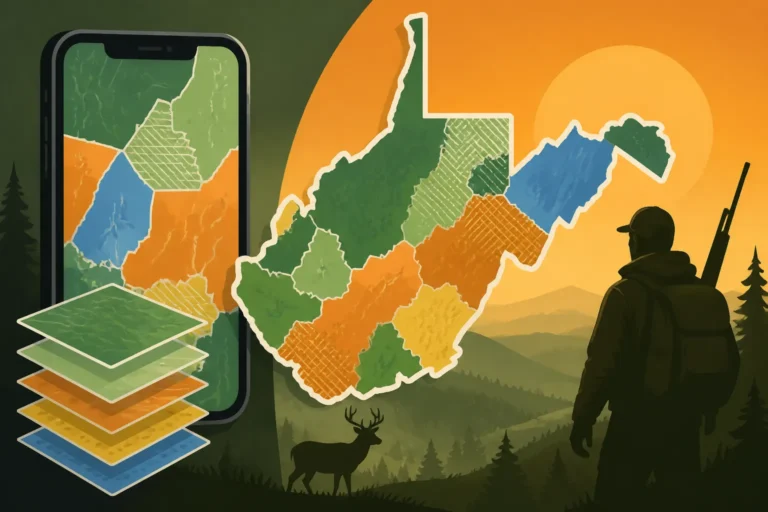
Hunters often find success targeting the rim of the gorge, where deer naturally travel between bedding areas on the steep slopes and feeding areas in more accessible timber. Ridge tops also offer great travel corridors. Be prepared for strenuous climbs and descents, as game can quickly drop into or climb out of the gorge, making tracking a real challenge. Using a robust mapping app like onX Hunt is almost essential here, as it clearly delineates property boundaries and hunting zones, helping you stay legal and on track. You'll want to layer your maps to differentiate between National Park and National Preserve land, as the rules differ.
Ansted Game Management Area
While not huge, the Ansted Game Management Area is a locally known spot that offers additional public access. It's managed by the West Virginia Division of Natural Resources (WVDNR) and provides opportunities for deer, turkey, and small game. These smaller WMAs, while not as vast as the New River Gorge, can be less pressured in certain spots, especially if you're willing to walk a bit further from the main access points. Access is generally off state routes and can involve walking through second-growth timber and some clear-cut areas from past logging operations, which can create excellent habitat for deer browse. The key here, as with all West Virginia Wildlife Management Areas, is to check the specific regulations for that WMA before you go.
Other Public Land Pockets
Beyond the primary areas, Fayette County has scattered smaller parcels of public land, including state forest land or even some unmanaged lands that fall under general state hunting laws. These often require more detailed scouting and research to locate. Sometimes they are landlocked by private property, making legal access a challenge. It's worth investing time in studying aerial maps, looking for those green or yellow sections that denote public ownership. Using digital mapping tools like onX Hunt can reveal these smaller, often overlooked parcels, and help you determine legal entry points without trespassing.
| Public Land Area | Primary Game Species | Typical Terrain | Access Challenges |
|---|---|---|---|
| New River Gorge National Park and Preserve | Deer, Turkey, Bear, Small Game | Very steep, deep hollows, high ridges, dense timber | Identifying hunting zones, strenuous hiking, limited roads |
| Ansted Game Management Area | Deer, Turkey, Small Game | Rolling to steep hills, mixed hardwoods, some clear-cuts | Parking limitations, navigation through dense regrowth |
| Scattered State Lands | Deer, Turkey, Small Game | Varied, often heavily wooded, potentially rugged | Identifying legal access, often landlocked |
Navigating Regulations and Practical Considerations for Fayette County
Hunting in Fayette County, especially within or adjacent to the New River Gorge, requires a good grasp of the regulations and a realistic understanding of the challenges involved. It's not a place for the unprepared, but for those who embrace the ruggedness, it can be incredibly rewarding.
Understanding Special Regulations
The New River Gorge National Park and Preserve has its own set of rules that overlay state hunting regulations. For instance, while West Virginia generally has liberal rules regarding blaze orange, specific federal lands might have different requirements for safety outside of firearm seasons. Always consult the National Park Service website for the New River Gorge and the WVDNR hunting regulations for the current year. These resources will clarify where hunting is allowed, what species can be hunted, and any special weapon restrictions or reporting requirements. Don't assume typical WMA rules apply everywhere; the Preserve is a unique beast.
Furthermore, hunters need to be acutely aware of property boundaries. It's easy to inadvertently stray onto private land or into non-hunting zones, especially in steep terrain where your focus is on footing. This is where tools like onX Hunt are invaluable, offering real-time GPS tracking against detailed property lines. You can mark your intended route and know exactly where you stand, literally.
Physical Demands and Equipment
Fayette County hunting is physically demanding. You'll be climbing, descending, and traversing steep ground, often carrying heavy gear or, hopefully, a harvested animal. Investing in high-quality Boots for West Virginia Hollows and Ridges is not an option; it's a necessity. Good ankle support and traction are paramount. A well-fitted pack that can handle extra layers, water, and emergency supplies is also critical. Consider trekking poles for stability, especially on slick leaves or muddy slopes.
For gear, if you're treestand hunting, lightweight, mobile setups are preferred given the effort to pack them in. Treestand Rules on West Virginia Public Land apply, so make sure your stand is clearly marked and doesn't damage trees. Because of the steep terrain, shot distances can vary wildly. You might have a close-range encounter in a hollow or a longer shot across a gap. Familiarize yourself with your weapon and its capabilities at various distances.
The Importance of Scouting
Before the season opens, Scouting West Virginia Public Land Before Season is absolutely critical in Fayette County. Due to the diverse terrain and varying access points, knowing the lay of the land, identifying game trails, bedding areas, and water sources will significantly increase your odds. Look for terrain features that naturally funnel deer or turkeys, such as saddles, benches, or creek bottoms. Reading the ground for sign, like tracks, rubs, and droppings, will tell you where animals are moving.
Digital scouting with tools like onX Hunt or even the WVDNR's Using the Go Wild West Virginia Map Tool can save you countless hours of unproductive walking. Use satellite imagery to identify potential access roads, steepness of slopes, and changes in timber type. Then, verify these findings on foot. Remember, the steepest, hardest-to-reach areas often hold less pressured game. Don't be afraid to put in the effort to get away from the easy access points.
Maximizing Your Hunt on Fayette County Public Land
Once you've done your homework and understand the lay of the land and regulations, it's time to put your plan into action. Hunting Fayette County public land means adapting to the mountain environment and being prepared for anything.
Strategies for Deer and Turkey
For white-tailed deer, focus on the transition zones between dense cover and feeding areas. In the New River Gorge, this often means the benches and shelves along the steep sides, where deer can find refuge and still access mast crops. During the rut, Hunting the West Virginia Rut in November means bucks will be moving more openly, often using ridge tops and saddles as travel corridors. Scouting for Scrape Lines Along a Logging Road and rub lines in these areas can be highly effective.
Wild turkeys, particularly gobblers in the spring, will often roost on prominent ridge tops or in large trees along the gorge rim. Wild Turkeys in West Virginia thrive here. Early morning hikes to get in position below a roost site can pay off, but be prepared for them to fly down into a hollow, leading to a challenging pursuit. In the fall, turkeys often congregate in family groups, feeding on acorns and other mast. Hunting West Virginia's Fall Turkey Splits offers different challenges based on the season.
Dealing with Other Hunters
Any public land will see hunting pressure, and Fayette County is no exception. However, the ruggedness of the terrain naturally filters out many hunters. The further you are willing to walk from a road or parking area, the less pressure you are likely to encounter. Don't be discouraged by a full parking lot; often, most hunters don't venture far from their vehicles.
Flexibility is key. If you arrive at a planned spot and find other vehicles, have a backup plan. Consulting your onX Hunt app to find alternative access points or less-traveled areas nearby can quickly turn a potential bust into a successful hunt. Often, finding ground that others walk past is the secret to consistent success on public land.
Post-Harvest Considerations
Successfully taking an animal in Fayette County's rugged terrain is only half the battle. Retrieving it can be the real challenge. Whether it's a deer in a deep hollow or a bear on a steep slope, plan for a difficult extraction. Carrying a good game bag, rope, and perhaps a small sled or deer cart (if the terrain allows for a portion of the drag) is wise. Consider the gutless method for larger animals like deer or bear to reduce weight, especially if you're a long way from an access point. Field Dressing a Deer in Cold Weather is one thing, but dragging one up a mountain is another. Always prioritize safety during retrieval, and never attempt to drag an animal down a dangerously steep slope by yourself.
Disclaimer
This article is for general informational purposes only and does not constitute professional advice. Laws, prices and regulations vary by location and change over time. Consult a qualified professional for guidance on your specific situation.