Eastern Panhandle Versus Southern Coalfield Deer
Hunting for white-tailed deer in West Virginia is an experience unlike any other, but if you've spent time in both the rolling farmlands of the Eastern Panhandle and the rugged, steep mountains of the Southern Coalfields, you know these two regions offer profoundly different challenges and rewards. It's easy to feel frustrated when tactics that work in one area completely fail in the other. This guide will dive deep into these geographical disparities, comparing deer populations, genetics, habitat, and hunting strategies so you can better understand and adapt to West Virginia's incredibly diverse deer hunting landscape.
Understanding West Virginia's Diverse Deer Habitats
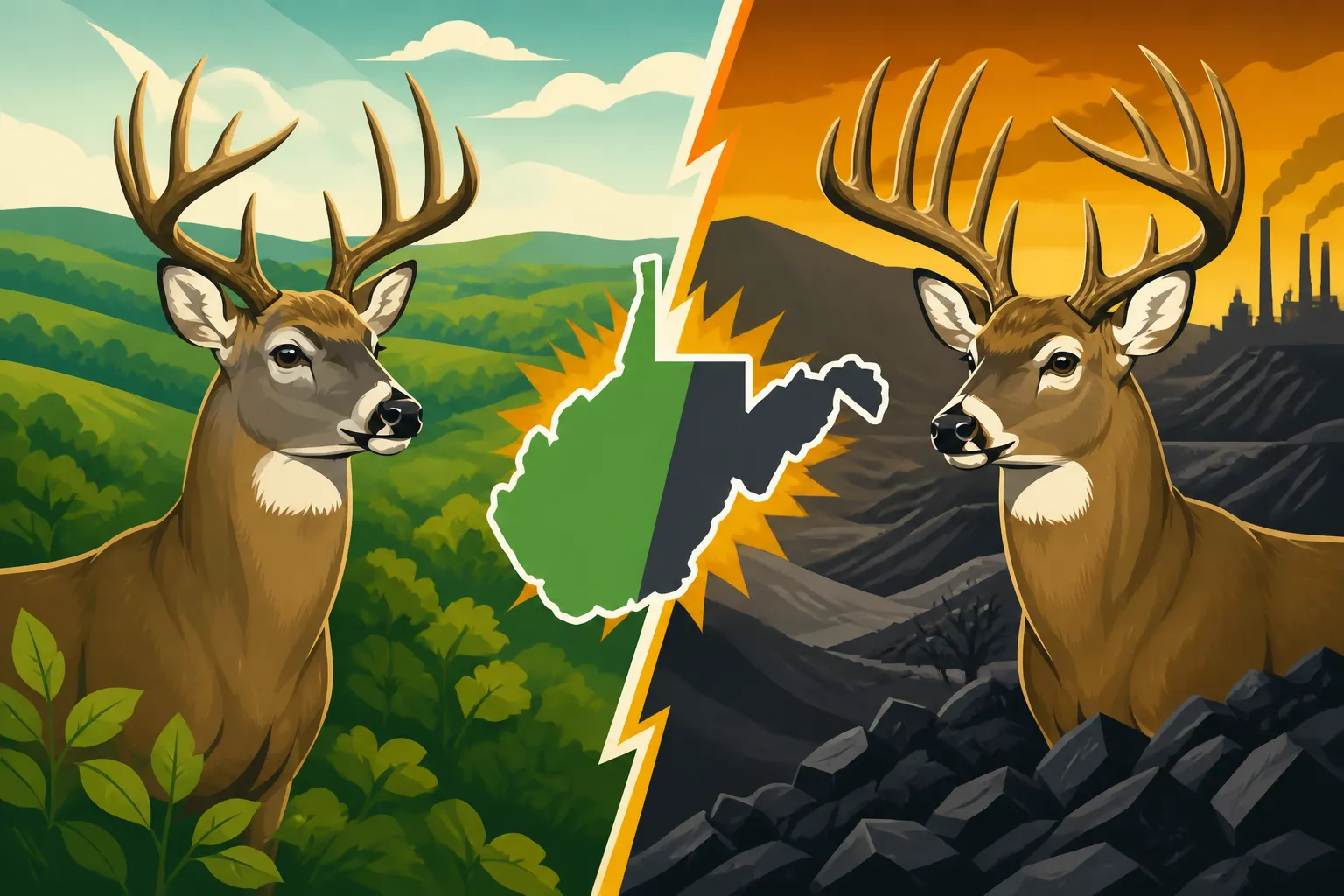
West Virginia, affectionately known as the Mountain State, lives up to its name with a landscape that shifts dramatically from east to west. This topographical variety isn't just scenic; it fundamentally shapes the environment in which deer live, influencing everything from their diet and movement patterns to their overall health and antler growth. Hunters often talk about "mountain deer" versus "farm deer," and nowhere is that distinction clearer than when comparing the Eastern Panhandle to the Southern Coalfields.
The Rugged Topography of the Southern Coalfields
Imagine a landscape dominated by steep, unforgiving slopes, deep hollows, and dense, unbroken timber. That's the Southern Coalfields. This region, encompassing counties like Logan, Mingo, McDowell, and Wyoming, is characterized by its heavily forested terrain, a legacy of extensive coal mining operations that left behind a patchwork of reclaimed lands and remote, untouched wilderness. The deer here are masters of navigating steep Allegheny Ridges, often bedding high on benches or tucked into the thickest cover they can find. Food sources are primarily natural browse, acorns, and other mast crops, which can fluctuate wildly from year to year. When you're in these mountains, you'll quickly realize that deer here work harder for their food, and their physical conditioning reflects that challenge. They're often leaner, more muscular, and incredibly agile, perfectly adapted to their strenuous environment. Hunting here demands a different kind of endurance and scouting.
Accessing these areas can be a significant challenge itself. Old logging roads, gas well pads, and winding creek bottoms often serve as the primary entry points, but beyond them, it's often a true backcountry experience. You might spend hours just hiking to a promising spot, only to find the deer sign more sparse than you'd hoped. The sheer scale of the landscape means deer can often disappear into vast tracts of unbroken forest, making traditional stand hunting difficult. Hunters often rely on strategies like still-hunting Cranberry WMA ridges or carefully working creek bottoms, focusing on pinch points and saddles that funnel deer movement. The reward, however, can be a truly wild deer taken from a remote, pristine setting, a testament to your own grit and perseverance.
The Agricultural Mosaic of the Eastern Panhandle
Now, picture a stark contrast: gently rolling hills, expansive crop fields of corn and soybeans, interspersed with hardwood timber lots and thick fencerows. This is the Eastern Panhandle, including counties like Berkeley, Jefferson, and parts of Hampshire and Mineral. Here, the landscape is shaped by agriculture, offering deer a consistently rich and abundant food supply. Deer in this region thrive on a diverse diet that includes tender shoots, agricultural crops, and lush forage, which contributes significantly to their body size and antler growth. The combination of easy access to high-energy food sources and plenty of cover in the remaining timber and thickets makes for a different type of deer population.
The deer in the Panhandle are often larger-bodied, with the potential to grow impressive antlers, directly benefiting from the consistent nutrition. They frequently bed down in dense woodlots bordering crop fields, using the fencerows and creek drainages as travel corridors between feeding and bedding areas. While there's still plenty of challenging hunting, especially in the more mountainous western fringes of the Panhandle, the overall experience feels more akin to midwestern deer hunting than traditional Appalachian mountain hunting. Understanding these agricultural patterns and how deer utilize them, such as hunting a standing soybean field or setting up on a Potomac Valley field edge, becomes paramount for success. The frustration here often comes from navigating property lines and hunting pressure, but the opportunities for encountering mature bucks can be excellent.
Deer Genetics and Antler Potential
It's a common misconception that all deer in West Virginia are created equal. While they're all white-tailed deer, the environmental factors influencing their growth and development can lead to noticeable differences between populations. When we look at the Eastern Panhandle and the Southern Coalfields, these differences become particularly apparent, especially concerning body size and antler development.
Nutritional Advantages in the Panhandle
The Eastern Panhandle is widely known for producing some of West Virginia's most impressive bucks. This isn't solely due to some mystical genetic superiority; it's heavily influenced by the nutrition available to the deer. Farmland deer have access to a smorgasbord of high-quality food sources. Think about it: fields of corn, soybeans, alfalfa, and winter wheat provide an almost year-round buffet of protein, carbohydrates, and essential minerals. This consistent, nutrient-rich diet allows bucks to maximize their genetic potential for antler growth, leading to larger, heavier racks. Does benefit too, resulting in healthier fawns and higher fawn survival rates, which contributes to a robust and growing deer population.
The fertile soils of the Panhandle also mean that the natural browse and mast crops found in the woodlots are often more nutritious than those in the less fertile mountain soils. It's a compounding effect: better natural forage combined with abundant agricultural crops. Hunters who focus on Hunting Eastern Panhandle farmland deer often pay close attention to crop rotations, as deer will adjust their feeding patterns based on what's available and what's most palatable. This abundance of nutrition means that, given enough age, a buck in the Panhandle has a much higher probability of expressing his full genetic potential for antler size compared to his mountain counterpart. When using a tool like GoHunt to scout, observing agricultural field types and patterns can reveal prime feeding areas and, subsequently, where the bigger bucks might be holding out.
Survival and Genetics in the Coalfields
In the Southern Coalfields, deer genetics are less about maximizing antler growth through abundant nutrition and more about survival and adaptation to a rugged environment. Deer here are often smaller-bodied and, on average, produce smaller antlers, though a mature buck from these mountains is still a magnificent trophy. The primary limiting factor is nutrition. The steep, rocky terrain doesn't support the same lush, diverse forage as agricultural areas. Natural mast crops like acorns, hickory nuts, and beechnuts are critical, but their availability can vary greatly year to year due to weather patterns, pest infestations, or drought. When there's a poor acorn year, deer really have to work to find enough food, impacting their overall health and, consequently, antler development.
However, the deer in the Coalfields are incredibly hardy and resourceful. Their genetics are geared towards efficient energy use, athleticism, and an innate ability to navigate and survive in harsh conditions. While they might not carry the same mass or spread as their Panhandle cousins, a 10-point buck from the Monongahela National Forest is an exceptionally tough animal, often older and wiser due to the sheer challenge of living in that environment. These deer develop robust senses and unparalleled stealth, often becoming ghosts in the timber. Tracking a deer through West Virginia leaf litter can be a grueling task, but the satisfaction of harvesting an animal that has thrived in such a challenging landscape is immense.
Hunting Pressure and Deer Behavior
Hunting pressure is an undeniable factor that shapes deer behavior, and it varies significantly between West Virginia's Eastern Panhandle and Southern Coalfields. Understanding how deer react to different levels and types of pressure is key to developing effective hunting strategies in either region. Hunters often face the dilemma of choosing between areas with abundant deer but higher pressure, or more remote areas with fewer deer but less competition.
Navigating High Pressure in the Panhandle
The Eastern Panhandle, with its desirable deer genetics and proximity to urban centers like Washington D.C. and Baltimore, often experiences higher hunting pressure, especially on publicly accessible lands and smaller private parcels. Deer here are highly educated. They've heard countless truck doors slam, seen numerous hunters walking trails, and learned to associate human scent and sound with danger. This leads to very specific behavioral adaptations. These deer often become primarily nocturnal, feeding in open fields only under the cover of darkness and retreating to thick, almost impenetrable cover during daylight hours. They'll use dense briar patches, laurel thickets, and deep creek bottoms as bedding areas, often surprisingly close to human activity.
To succeed in high-pressure areas, you need to think differently. Forget easy-to-access spots right off the road; those areas are often picked over quickly. Focus on scouting for pockets of overlooked cover, even small ones, that other hunters might bypass. Finding ground others walk past is a critical skill here. Entry and exit routes to your stand become paramount; you need to approach and leave without alerting deer. Using tools like GoHunt's satellite imagery can help identify those hard-to-reach thickets or small woodlots that connect larger tracts of cover. Sometimes, hunting mid-week when pressure is lower, or hunting during periods of inclement weather that deter other hunters, can also increase your odds of encountering a less-pressured deer. Deer drives with three or four hunters can also be effective in moving deer out of thickets they've learned to hide in.
Secluded Opportunities in the Coalfields
In contrast, the Southern Coalfields, with their vast expanses of rugged terrain and often limited access, typically see less overall hunting pressure in many areas. While popular spots near roads or easy trails can still get crowded, especially during opening weekend crowds on West Virginia public land, the sheer remoteness of much of this region means that if you're willing to put in the effort, you can find truly secluded hunting experiences. Deer in these deep hollows and vast timber tracts are often less wary of human presence, simply because they encounter it less frequently. They might move more during daylight hours, use more predictable patterns, and be less jumpy than their Panhandle counterparts.
However, "less pressure" doesn't mean "easy hunting." The challenge here isn't necessarily the deer's wariness, but the sheer difficulty of finding them in the first place, and then getting into a position to take a shot. Deer can roam huge territories in these mountains, and good sign can be widespread, making it difficult to pinpoint consistent travel routes or bedding areas. This is where diligent scouting, often involving covering miles on foot, becomes crucial. Learning to read a ridge for Eastern Panhandle deer, or more generally for mountain deer, understanding wind and thermals on a steep ridge, and identifying subtle funnels between hollows are indispensable skills. While you might not see as many deer as in the Panhandle, the deer you do encounter often behave more naturally, offering a more traditional mountain hunting experience.
Tactics Tailored to Each Region
Given the dramatic differences in habitat, deer behavior, and hunting pressure, it's no surprise that successful hunting tactics need to be highly localized. What works wonders in a flat soybean field will likely leave you frustrated on a steep mountain bench. Let's break down some region-specific strategies.
Eastern Panhandle Strategies: Fields and Woodlots
Hunting the Eastern Panhandle often revolves around agriculture and the woodlots that dissect it. Deer here are constantly moving between bedding cover and feeding areas. One of the most common and effective tactics is setting up on field edges, particularly along standing corn or soybean fields, or where a woodlot meets a lush food source. Understanding when deer will move into these fields – typically in the late afternoon or early morning – is key. A portable treestand or a well-brushed in blind on a field edge can be deadly, provided your entry and exit are silent and scent-free.
Beyond field edges, focus on pinch points and funnels within the timbered areas. These might be narrow strips of woods connecting larger blocks of cover, natural saddles between small hills, or thick creek bottoms that deer use to travel unnoticed. Scouting for scrape lines along a logging road or looking for heavily used trails entering or exiting food sources will provide valuable clues. Rattling and grunting in West Virginia can also be very effective during the rut, especially in the more open, agricultural settings where calls can carry further. When you use tools like GoHunt, pay close attention to the satellite views to identify those crucial transition zones and thick cover within the farm country. Remember, these deer are smart, so consistent scouting and adapting to their exact patterns are more important than just blindly setting up on a field.
Southern Coalfield Tactics: Steep Terrain and Remote Timber
Hunting the Southern Coalfields demands a much more physically demanding and often solitary approach. Forget sitting on a comfortable field edge; here, you're often navigating dense timber, steep hillsides, and deep hollows. Still-hunting and tracking are highly effective methods. Moving slowly and deliberately through the woods, pausing frequently to glass ahead and scan for movement, can put you on a buck that might never walk past a static stand. Understanding wind and thermals on a steep ridge is absolutely critical, as swirling winds can betray your presence instantly. Bucks in these mountains will often bed on benches roughly two-thirds of the way up a ridge, where they have a commanding view of the downhill approach and can catch rising thermals.
For stand hunting, focus on natural funnels created by the topography. This could be a narrow saddle between two peaks, a distinct bench line on a steep hillside, or a creek bottom that forces deer into a predictable path. Hanging a stand on a steep Allegheny ridge requires specialized climbing sticks and careful attention to safety. Scout heavily for mast crops like acorns; in these areas, deer will follow the food. If you can find a concentration of fresh mast in a remote hollow, you've found a goldmine. Public land can be vast, so don't be afraid to put in the miles. The further you get from road access, the less pressure you're likely to encounter, and the more likely you are to find an older, less pressured buck. Hunting the West Virginia rut in November can offer excellent opportunities if you've done your homework scouting these remote areas.
Season Structure and Regulations
While West Virginia's statewide deer season structure shares many commonalities, there are crucial regional distinctions that hunters must be aware of, particularly when it comes to the Southern Coalfields and the Eastern Panhandle. These differences can significantly impact your hunting plans and what weapons you can legally use.
Archery-Only Zones in the Southern Counties
One of the most notable differences lies in the Southern Coalfields, specifically in four counties: Logan, Mingo, McDowell, and Wyoming. These counties are unique in West Virginia because they are designated as archery-only for deer hunting, meaning firearms are prohibited for deer during the regular deer season. This regulation stems from a historical decision to manage deer populations and hunting pressure in these particular areas, creating a very distinct hunting experience. For a bowhunter, these counties represent an extended archery season without the interruption of the gun season, potentially offering some incredible opportunities for undisturbed deer movement, especially during the peak rut. You can learn more about West Virginia's Archery-Only Southern Counties to understand the history and nuances.
This archery-only status influences deer behavior indirectly as well. Deer in these counties might be less wary of human presence during the firearms season because they haven't experienced the same level of gun pressure. However, bowhunters still need to be incredibly proficient and patient. The rugged terrain remains a formidable challenge, and while the absence of firearms hunters might reduce overall pressure, it doesn't make the deer any easier to find or stalk in the dense cover. Crossbow rules during West Virginia archery season also apply here, providing an option for hunters who prefer or require a crossbow, as long as they meet the specific equipment requirements. This unique regulation is a major planning consideration if you intend to hunt these specific Southern Coalfield counties.
General Regulations in the Eastern Panhandle
The Eastern Panhandle counties, along with most of the rest of the state, operate under West Virginia's standard deer season structure. This means hunters have access to the full range of seasons: archery, crossbow, muzzleloader, and the general buck gun season, followed by various antlerless opportunities. The general buck gun season opens typically in late November, overlapping with a significant portion of the rut, providing a prime window for firearm hunters. This also means that deer in the Panhandle experience a much higher level of hunting pressure during the gun season, leading to the aforementioned behavioral adaptations like increased nocturnal movement.
Additionally, many Panhandle counties have liberal antlerless deer seasons, including county-specific early antlerless season dates and later opportunities, often due to higher deer densities and agricultural damage concerns. This provides more chances to fill the freezer, but it also means hunters must be meticulous about checking specific county regulations on the West Virginia Division of Natural Resources (WVDNR) website or through resources like GoHunt. For example, some counties might have specific bag limits or require bonus antlerless tags. Understanding when West Virginia's buck gun season opens and how long it runs, along with any special antlerless dates, is crucial for planning a hunt in this region. Hunters also need to be aware of how much blaze orange West Virginia requires during firearm seasons, a safety measure that is strictly enforced.
Here's a quick comparison of the two regions:
| Feature | Eastern Panhandle | Southern Coalfields |
|---|---|---|
| Primary Terrain | Rolling hills, agricultural fields, interspersed woodlots | Steep mountains, deep hollows, dense unbroken timber |
| Primary Food Sources | Abundant agricultural crops, lush natural browse | Primarily natural mast (acorns, hickory), limited browse |
| Deer Body/Antler Size | Generally larger bodies, higher antler potential (avg.) | Generally smaller bodies, hardier, smaller antler potential (avg.) |
| Hunting Pressure | Higher, especially near roads/private land | Generally lower in remote areas, higher near access points |
| Typical Deer Behavior | More nocturnal, uses thickets near fields for bedding | More natural movement, uses benches/hollows for bedding |
| Weapon Restrictions | All legal weapons (bow, crossbow, muzzleloader, gun) | Archery-Only in Logan, Mingo, McDowell, Wyoming counties for deer |
| Access | Mixed private/public, easier vehicle access | Largely public, often remote, requires significant hiking |
Success Rates and Expectations
It's easy to get caught up in the allure of big antlers or the romance of a truly wild hunt. However, setting realistic expectations is crucial for enjoying your West Virginia deer hunting experience, whether you're chasing farm bucks or mountain ghosts. Success isn't always measured in inches of antler.
Managing Expectations for Trophy Bucks
If your primary goal is to harvest a Boone and Crockett caliber buck, the Eastern Panhandle often presents statistically better opportunities. The consistent, rich nutrition from agricultural lands gives deer here the best chance to grow truly impressive antlers, given enough age. However, this doesn't mean it's easy. As discussed, the deer are smart, pressure can be high, and securing access to prime private land can be a significant challenge. Even on public land in the Panhandle, these trophy animals are hard-earned, requiring diligent scouting, precise execution, and a good dose of luck. Don't expect to simply show up and shoot a giant. You'll need to put in the work to understand deer movement patterns between crop fields and bedding areas, often utilizing trail cameras to identify specific animals. The phrase "Why the Eastern Panhandle grows big bucks" often boils down to a combination of nutrition, age structure, and selective harvest practices.
It's important to remember that "trophy" is subjective. While the Panhandle might offer higher odds for B&C contenders, a mature, heavy-bodied mountain buck from the Southern Coalfields, even with smaller antlers, is an incredible achievement. These deer have survived against formidable odds in a tough environment, making them true trophies in their own right. Don't let the quest for a score overshadow the experience of hunting a truly wild animal in a challenging, beautiful landscape.
Enjoying the Experience in Both Regions
Ultimately, West Virginia offers a diversity of hunting experiences that few other states can match. The Southern Coalfields cater to the hunter who relishes solitude, physical challenge, and the thrill of pursuing truly wild deer in expansive, remote settings. Here, success might be measured by the miles you cover, the breathtaking views you encounter, or the satisfaction of outsmarting a cunning buck on his home turf. It's about disconnecting from the everyday hustle and immersing yourself in the raw beauty of the Appalachian mountains. Hunting a high elevation mountain bench or working river cane thickets for deer requires different skills, but both offer unique rewards.
The Eastern Panhandle, on the other hand, appeals to those who enjoy the chess match of outmaneuvering highly pressured, well-fed deer that often grow larger antlers. It's a game of precision, stealth, and understanding how deer utilize the patchwork of agriculture and timber. Both regions require dedication, respect for the animals, and a deep understanding of the environment. Whether you're hiking into the Cranberry backcountry wilderness edge or sitting a field edge in late season, the Mountain State provides incredible opportunities for memorable hunts. Embrace the differences, learn to adapt your strategies, and you'll find immense satisfaction in whatever part of West Virginia you choose to hunt.
Disclaimer
Hunting involves inherent risks, and conditions in the field can change rapidly. Always prioritize safety, adhere to all West Virginia hunting regulations, and ensure you have the appropriate licenses and permits. Consult the official West Virginia Division of Natural Resources (WVDNR) website for the most current rules and season dates before planning any hunt. This guide is for informational purposes only and should not replace official sources or professional advice.