Hunting Above the Fog Line in the Mountains
There's nothing quite like the crushing disappointment of waking up before dawn, trekking into your favorite West Virginia mountain hunting spot, and finding yourself enveloped in a thick, soupy fog. It wraps around you, dampens your spirits, and makes seeing more than 30 yards an impossible dream. You know the deer are out there, but visibility is zero, and it feels like your hunt is over before it even began. This guide will delve into the unique challenges and incredible opportunities of hunting above that dreaded fog line, helping you turn frustration into a successful hunt in the clear mountain air.
Understanding the Fog Line Phenomenon
That blanket of fog you often encounter in the mountains isn't just random moisture; it's a predictable atmospheric event, and understanding it is your first step to hunting above it. West Virginia's rugged terrain and dynamic weather patterns create ideal conditions for these phenomena, often leading to distinct 'fog lines' that can make or break a hunt.
What Causes the Fog Line in West Virginia Mountains?
The "fog line" often forms due to a weather phenomenon called a temperature inversion. Normally, air temperature decreases with altitude. However, during an inversion, a layer of warmer air settles above a layer of cooler air near the ground. This cooler air, often trapped in valleys or hollows, cools further overnight, reaching its dew point and condensing into fog. The warmer air above acts like a lid, preventing the fog from rising past a certain elevation – that's your fog line.
In West Virginia, especially in the deep hollows and along the vast slopes of the Monongahela National Forest or the Potomac Highlands, these inversions are common. Picture a cold, clear night followed by a still morning. The cold, dense air sinks into the valleys and creek bottoms. As the sun begins to rise, it warms the upper ridges first, but the cool air (and moisture) remains trapped below, creating a distinct visual line where the fog ends and clear skies begin. It's a striking sight, but for hunters stuck below it, it's also incredibly frustrating.
How the Fog Line Impacts Deer and Other Game Movement
The fog line isn't just a visual barrier; it profoundly impacts how deer and other game behave. Below the fog, visibility is minimal, making it hard for both predator and prey to see. This might seem like an advantage for stalking, but it also means the deer are less likely to be on the move, preferring to bed down and wait for conditions to clear. Scent also behaves differently in dense, still fog; it tends to hang low and not disperse widely, which can be both a blessing and a curse. A deer might wind you easily if you're directly downwind in the fog, but it might not pick up distant scents at all.
Above the fog, it's a whole different world. The air is often clearer, crisper, and sometimes even warmer if the sun is hitting those higher elevations. Game animals, including our target deer and even the occasional bear or turkey, often prefer these clearer, warmer conditions. They might move up out of the damp, chilly fog to feed, bask in the sun, or simply enjoy better visibility for security. You might find deer moving along high benches or ridge tops when the valleys are socked in. Understanding this behavior can be a game-changer for your hunting strategy, allowing you to intercept animals moving to or from these "above the fog" zones.
Identifying the Fog Line on Different Terrain
Spotting the potential for a fog line starts long before you ever leave camp. You need to understand your hunting area's topography. Valleys and deep hollows are prime candidates for trapping cold, moist air. Conversely, long, sweeping ridges and higher elevation benches are often above the fog. If you're hunting steep Allegheny ridges, for instance, you'll notice how often the lower sections are choked with fog while the very tops are bathed in sunshine.
Using detailed topographic maps or satellite imagery from tools like the GoHunt app can help you identify these natural elevation breaks. Look for areas where the terrain rises sharply from a valley floor to a broad bench or a distinct ridge. These are your targets. If the weather forecast calls for calm winds and cool, clear nights, especially in late fall or early winter, chances are good you'll be dealing with a fog line. Knowing the elevation of your stands or proposed hunting spots relative to these features is key. A stand at 2,500 feet might be in the clear, while one at 2,000 feet just a few hundred yards away could be completely socked in.
Scouting and Strategy Above the Fog
Hunting above the fog line isn't just about showing up at a higher elevation; it requires specific scouting and strategic adjustments to capitalize on these unique conditions. You're essentially looking for a "weather-protected" hunting zone that offers distinct advantages.
Pre-Season Scouting for High-Elevation Hotspots
Before the season even begins, you need to identify those high-elevation areas that are likely to be above the fog. This isn't just about looking at a map and picking the highest point. You need to scout these areas for actual game sign. Are there old logging roads or clearings along a ridge top? Are there benches with oak trees producing acorns? Do you see rubs and scrapes indicating buck activity?
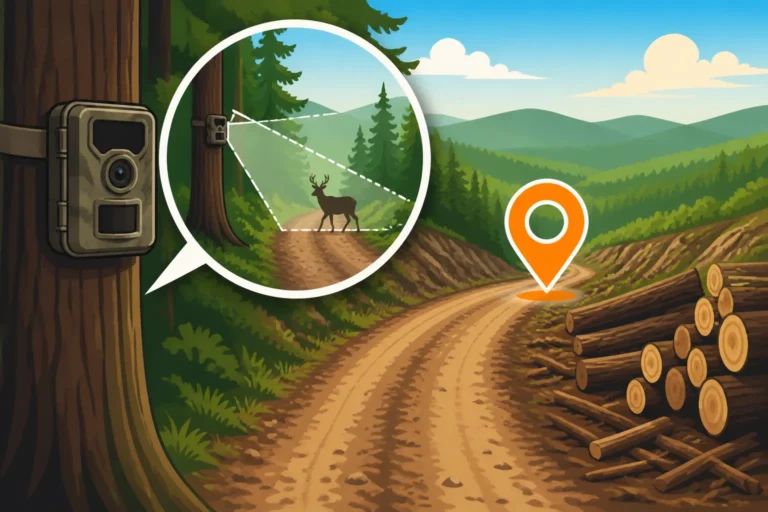
During summer and early fall, use trail cameras in these higher zones. While game might not be consistently using them during warmer, clearer weather, these cameras can confirm the presence of deer and other animals, establishing their travel corridors and food preferences at altitude. Pay attention to game trails that ascend from lower elevations onto these ridges; these are potential routes animals will use to escape the fog. Look for specific features like rock outcroppings, saddles, or dense cover on sunny slopes where deer might bed to catch warmth after climbing out of the cold, damp valleys. A thorough understanding of where Monongahela Forest bucks bed can significantly inform your high-elevation scouting.
Adjusting Your Hunting Tactics for Clearer Air
Once you're above the fog, your hunting strategy shifts dramatically. Gone are the days of short-range visibility. Now, you can often see for hundreds of yards, making glassing a primary tactic. High-quality optics for steep Allegheny terrain become invaluable. Instead of sitting tight in dense cover, consider positions that offer expansive views of ridges, saddles, and benches. A good pair of 10×42 binoculars can help you pick apart distant cover for movement.
Wind and thermals on a steep ridge behave differently than in a flat woodlot. Early mornings, as the sun begins to warm the slopes, thermals typically rise. This means your scent will be carried uphill. Later in the day, as temperatures cool, thermals will often drop back down into the hollows. Understanding these subtle shifts is crucial to maintaining a favorable wind. When hunting above the fog, you often have more consistent, directional winds compared to the swirling, unpredictable air currents found in dense fog below. This can make setting up a stand or planning a still-hunt route much more predictable. Remember, with clearer air, long-range shots might be possible, so ensure your rifle is zeroed correctly and you're confident in your ethical shooting distance.
Utilizing Elevation Changes to Your Advantage
The "fog line" provides a natural barrier that you can exploit. Imagine a deer bedded in the damp, cold fog in a hollow. As the sun starts to warm the upper slopes, that deer might decide to move uphill, seeking the warmth and clearer air. You, being positioned above the fog, are in a perfect position to intercept it.
Consider "pushing" deer from the fog. If you're with a hunting party, one or two hunters can slowly still-hunt through the upper edge of the fog, gently moving deer uphill towards standers strategically placed above the fog line on benches or saddles. Conversely, if you observe deer high on a ridge at first light, they might descend into the fog for bedding cover later in the morning once the higher ground sees more hunting pressure. Being adaptable and understanding these movements is key. Think about using a ridge-top saddle for rutting bucks as a natural funnel point they might use to traverse between foggy bedding areas and clear feeding grounds.
Essential Gear and Safety Considerations
Hunting above the fog line often means operating in more remote, rugged conditions with rapidly changing weather. Having the right gear isn't just about comfort; it's about safety and success.
Optics and Visibility Gear
When you break through the fog into clear mountain air, your world expands. Suddenly, you can see far more than you could below. This is where your optics truly shine. A good pair of binoculars, like a high-quality 10×42, becomes your most important scouting tool from the stand. You'll be able to pick apart distant dark timber, glass clear-cuts, or scan powerline cuts for any sign of movement. Don't skimp here; clear, bright glass makes a world of difference in identifying game at long ranges and in varying light conditions.
A reliable rangefinder is also crucial. While the air might be clear, judging distance on steep, broken terrain can be tricky. A rangefinder that offers angle compensation will give you accurate shot distances for those uphill or downhill shots that are common when hunting above the fog. For rifle hunters, consider a scope with good light-gathering capabilities and a clear, simple reticle. An illuminated reticle can be a blessing in the low light of dawn or dusk, even if you're above the fog line. Remember, even above the fog, the sun can be low on the horizon, creating challenging shadows.
Clothing and Comfort for Rapid Weather Changes
West Virginia mountain weather is notoriously unpredictable, and even more so when you're dealing with elevation changes. Below the fog line, it might be damp, chilly, and still. Above it, it could be sunny and relatively warm, but with a brisk wind, or it could be snowing. Layering is not just a suggestion; it's a necessity.
Start with a good base layer that wicks moisture away from your skin, even if you're just hiking in. A merino wool or quality synthetic base is ideal. Follow that with insulating layers, like a fleece or puffy jacket, that you can easily add or remove. Your outer shell should be windproof and waterproof, protecting you from sudden rain, snow, or biting winds. When you're sitting in a stand, wearing layers for a West Virginia deer stand will allow you to adjust to the temperature fluctuations throughout the day. Don't forget insulated, waterproof boots. You might be walking through damp ground to get to your spot, but then sitting in colder air at elevation. Boots for West Virginia hollows and ridges that provide good ankle support and warmth are essential. A warm hat and gloves or mittens are also non-negotiable, as you lose a lot of heat through your head and extremities.
Navigation and Emergency Preparedness
Hunting remote mountain terrain, especially when you're actively trying to get above a fog line, means you're often far from marked trails and cell service. Reliable navigation is paramount. A dedicated GPS unit or a mapping app like GoHunt on your phone (with downloaded offline maps) is essential. Know how to mark your stand, your truck, and any key terrain features. Always carry a physical map and compass as a backup, and know how to use them. Technology fails, batteries die, but a map and compass generally won't.
Furthermore, always carry a small but comprehensive first-aid kit. You're far from help up there. A whistle, a fire-starting kit, extra water, and high-energy snacks are also critical. Consider a satellite communication device, like a Garmin InReach or Spot device, especially if you're hunting alone. These allow you to send SOS messages or check-in with loved ones even without cell service. Recovering a deer from a steep hollow can be challenging, so be prepared for difficult conditions and potential delays, and always let someone know where you're going and when you expect to return.
Real-World Scenarios and Success Stories
Let's talk about how this all plays out in the wild. These aren't just theories; they're tactics that have brought success to many hunters in the rugged West Virginia mountains.
The Ridge Runner's Advantage
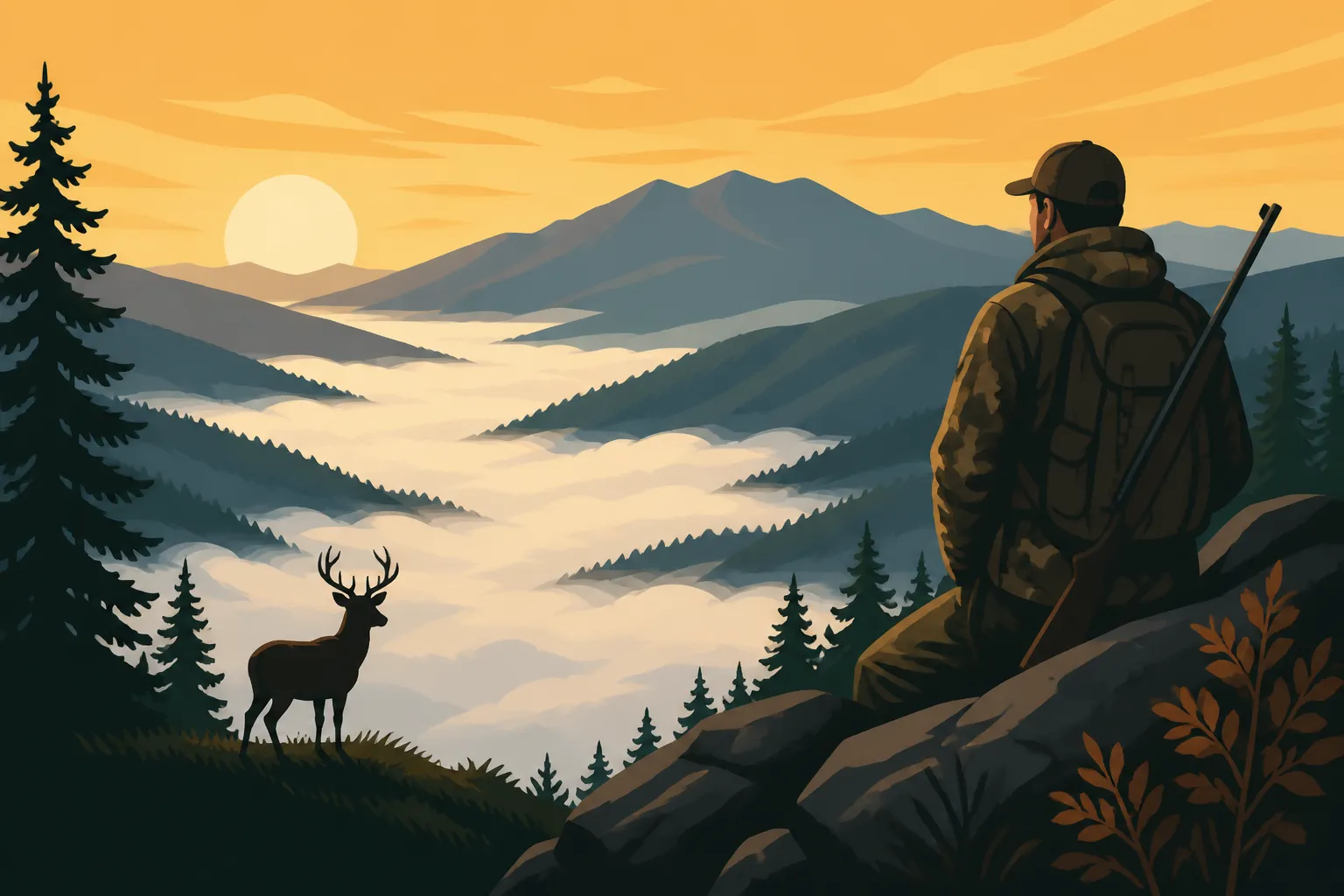
Imagine a crisp November morning, a day during West Virginia's buck gun season, and the lower valleys around Canaan Valley are choked with a thick, impenetrable fog. You've hiked an hour before dawn, climbing steadily, knowing that the ridgeline often pierces through the inversion. As the sun begins to lighten the sky, you suddenly break through the grey, misty blanket. Below you, a sea of white fog stretches as far as the eye can see, but above, the sky is a brilliant, clear blue, and the rising sun is painting the distant peaks with gold.
You move slowly along the ridge top, utilizing the clearer visibility. Instead of blindly pushing through thick laurel, you're now glassing ahead, using your binoculars to scan every dip and rise, every patch of open timber. You're paying attention to the wind, knowing that it's likely blowing consistently across the ridge rather than swirling chaotically. Suddenly, 300 yards ahead, a flicker of movement. A mature buck, perhaps seeking the sun's warmth, or simply wanting to get out of the damp, cold fog, is slowly making his way along a high elevation mountain bench. This is the ridge runner's advantage: clear visibility, predictable thermals, and deer moving towards more favorable conditions. You set up, take a steady rest, and make a clean shot that would have been impossible just a few hundred feet below.
The Mid-Day Lift
Sometimes, the fog is so pervasive that even the highest ridges are initially covered. You might start your hunt in a dismal, soupy world, unable to see anything. It's easy to get discouraged and head back to the truck. But here's where patience, and understanding the "mid-day lift," comes into play.
As the sun gains strength through the morning, it begins to burn off the fog, often from the top down. What started as a completely socked-in mountain can transform dramatically by 10 or 11 AM. As the fog dissipates, deer that have been bedded down in the thick cover suddenly find themselves with improved visibility and potentially rising temperatures. This can trigger a burst of mid-day movement. I've seen mornings where I was ready to pack it in, only for the fog to suddenly break, revealing deer actively feeding or moving through saddles they were too hesitant to cross just an hour earlier. This is a prime time for a quiet still-hunt or to be vigilant in a stand overlooking a clearing that was previously invisible. Don't give up on a foggy morning too early; that mid-day lift can be your golden hour.
Overcoming the Psychological Challenge
Hunting above the fog line isn't just a physical challenge; it's a mental one. The arduous climb in the dark, the initial feeling of being utterly alone in a sea of grey, and the persistent dampness can wear on you. Many hunters simply don't have the patience or the willingness to push through these initial conditions. This is where your persistence pays off.
It takes a certain stubbornness to trust your scouting, to believe that above that cloud layer is a world of clear air and moving game. It means enduring cold, damp conditions below the fog, sometimes for hours, knowing that the payoff might be just a few hundred feet higher. The reward, however, is often solitude and unpressured game. While others are heading home or waiting for the fog to clear in the lower elevations, you're in a completely different hunting environment, one with less competition and often better visibility. It's about having the grit to keep going, to trust the science of the weather, and to know that a unique and productive hunt awaits you above the clouds.
Here's a comparison of hunting conditions above versus below the fog line:
| Feature | Below the Fog Line | Above the Fog Line |
|---|---|---|
| Visibility | Extremely limited (often < 50 yards) | Generally clear (hundreds of yards possible) |
| Scent Behavior | Hangs low, swirls, unpredictable | More predictable wind currents, rises with thermals |
| Temperature | Colder, damp, stagnant | Often warmer (sun exposure), but can be windy/cold |
| Game Movement | Bedded, hesitant to move, seeking cover | More active, seeking sun/clearer air, feeding |
| Hunter Traffic | Often higher, as hunters attempt to wait it out | Lower, as many hunters don't make the climb |
| Strategy | Still-hunting, listening, short-range encounters | Glassing, spot & stalk, long-range opportunities |
| Challenges | Frustration, limited vision, getting lost | Steep climbs, rapid weather changes, navigation |
Disclaimer
Hunting in West Virginia's mountains, especially in varying weather conditions and elevations, carries inherent risks. Always prioritize safety, understand and follow all West Virginia hunting regulations, and ensure you are physically prepared for the demands of the terrain. The information provided here is for educational and informational purposes only and should not replace professional guidance or personal judgment.